>>
-

<<
-
TOP NAV reset map list all ??


advertisement


Waunita Pass 

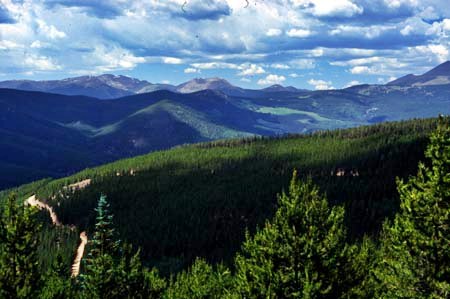
When looking at Waunita Pass on a map, it bears resemblance to the scenic Cumberland Pass route to the north. Both are located west of the mighty Sawatch Range. They both stretch north - south, making their way to the summit in a profusion of switchbacks. After examining the contour lines more closely - or better yet - cycling over the pass - reality corrects this impression. Waunita Pass is a gentle forest road. Switchbacks are there to minimize the grade, not force the way up the ridge.


click on profile for more detail
1.(7950ft,mile00) START-END WEST: Parlin
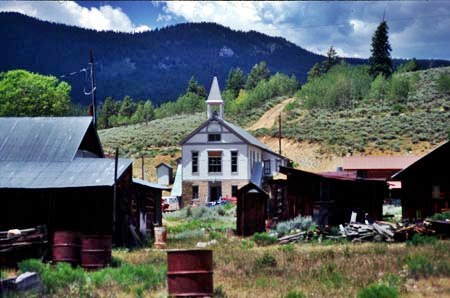
2.(8590ft,mile09) Ohio City ( neither in Ohio nor a city )
3.(9180ft,mile16) southern end of Pitkin. Route turns left and returns in the same direction that it arrived but on the east side of Quartz creek.
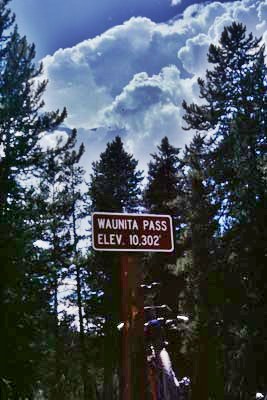
4.(10303ft,mile20) TOP: Waunita Pass
5.(8990ft,mile26) START-END ALTERNATE EAST: Waunita Park, turn right for Waunita Hot Springs and to continue along the profile. Left leads to Black Sage Pass.
6.(8060ft,mile35) START-END EAST: junction with US50 near Doyleville

Approaches

From North. The summit of Waunita Pass is the lowest summit accessed from Pitkin. It makes a nice contrast to the monumental routes leaving north to Hancock Pass and Cumberland Pass.

From South. The first part of the profile is an elaborately maintained gravel road serving Waunita Hot Springs traffic. Shortly past this point a pleasant climb leaves Waunita Park over a series of forested hills with a steady, low but definitely discernible grade.

Tours

Dayrides. A loop ride from Parlin, through Ohio City, over Waunita Pass, returning through Waunita Hot Springs back to the starting point, mesured 47 miles with 2940 ft of climbing in 4.1 hours.


History. 

Leadville Mining Boom. During the mining era Waunita Pass was on the route of most Pitkin bound travellers. They approached the pass from the south, from the site of present day Sargents after having crossed a predecessor of Monarch Pass This low pass was shorter than descending further into the Gunnison Valley .

Even after Pitkin gained rail access through the legendary alpine tunnel, the pass remained a popular route to Waunita Hot Springs, an early resort for Pitkin residents. This touristic quality helps explain the gentle grade of the crossing. There was also some gold found south of the pass. But the activity was short lived. By 1919, the pass was no longer included in an official list of passes in the state. But today is again marked on national forest maps.


back to Colorado Pass Tables Page


-------
Copyright (C) by Michael Fiebach 2003-2011
-------